Wednesday, June 16, 2021

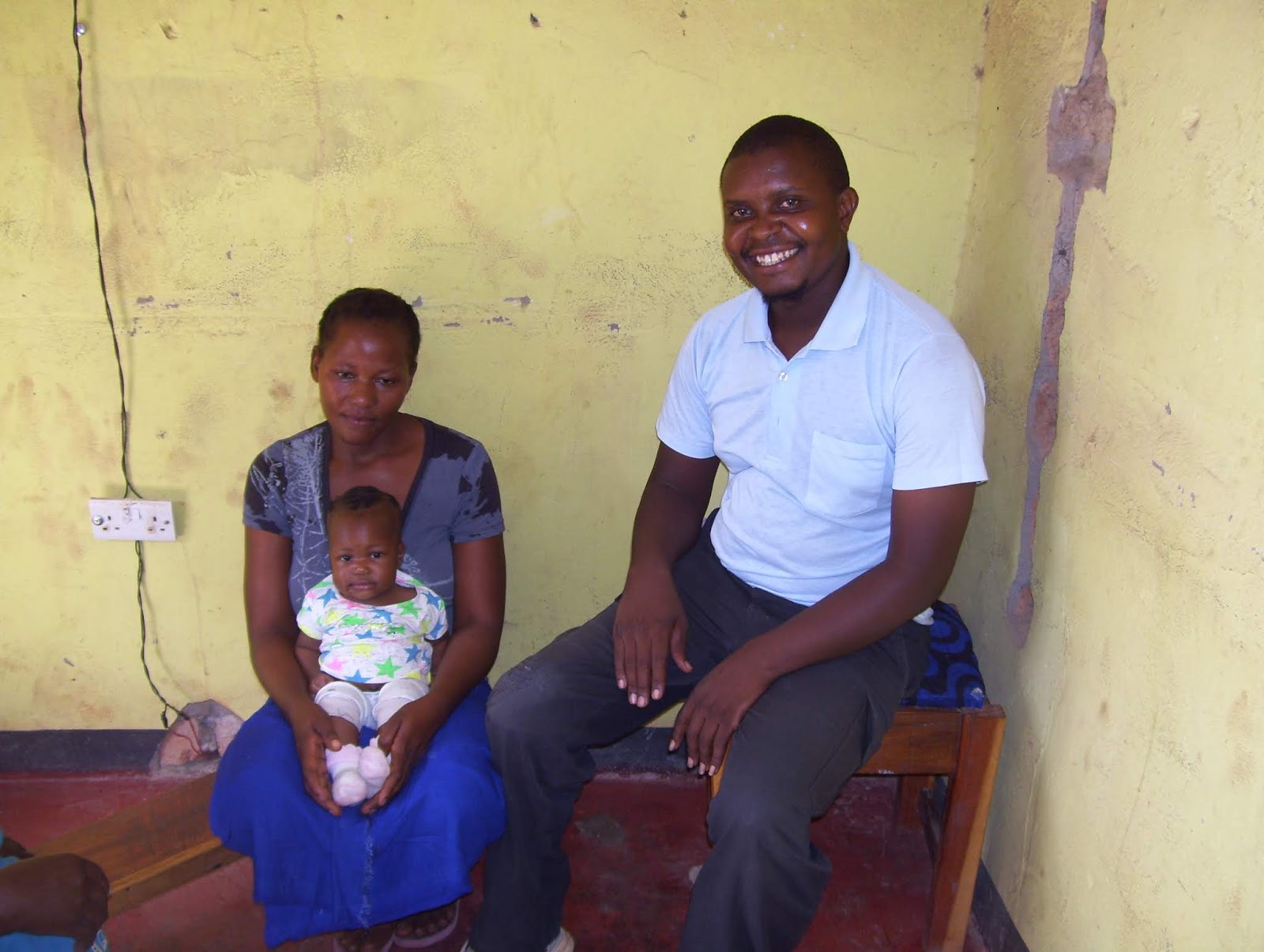
Mrs. Chiiya


Mrs Chiiya

Today I received the sad news that Mrs. Chiiya died early this morning.

In my last post I mentioned the guest house “Nampeyo” where our team lived during my first visit to Monze.

Nampeyo was owned by Mrs. Chiiya's husband and so it was in 2003 that I first met the Chiiya family. Mrs. Chiiya was headteacher at Tagore Basic School – a government school not far from the centre of Monze – and about half way between Monze Mission Hospital and Nampeyo Guest House.

Over the years Mrs. Chiiya embarked on a number of projects – initially a vocational skills centre, which morphed into a school and eventually became a school of nursing. This nurse training centre is still in operation.

I kept in touch with Mrs. Chiiya over the years and was always warmly welcomed with cup of tea and biscuits! We chatted over family and friends, Hands Around the World and her latest projects among other things. She was always very hospitable and it was good to catch up.

In 2011 when my granddaughter Amy came to Zambia she spent some time with Saki – one of Mrs. Chiiya's children.

Most years I would make a point of contacting Mrs. Chiiya – if I didn't bump into her on the street. She would always invite me to her house. She was a woman with a large presence – not only physically, but also had a large personality. She certainly made an impression!


I will miss her and will always remember what became her catchphrase “It isn't easy”. I trust that she is now at peace, her struggles are over and life should at last be easy. May she rest in peace.


Chris


Saturday, June 5, 2021

The Beginning of my Life in Zambia


The Beginning

A parishioner found my blog on our parish website and reminded me that it is time to post again.

My blog online goes back to 2007, but doesn't cover the first years, so I thought that it might be good idea to reflect on where my life in Zambia began.

In 2003 I set out with a team of 8 or 9 volunteers to travel to Zambia. The theory was that we were going there to build an ICU at Monze Mission Hospital.


Hands Around the World is a small charity which had been running for about 10 years. It was established by David Steiner after he spent a year with his family in Zambia. During the malaria season lots of children came to the hospital where he was working, and many died. He decided to set up the charity to do something to support children in the poorest areas of the world and try to make a difference.

Previously teams had been to Monze Mission Hospital and did some work to improve the laboratory and pharmacy buildings. Now you might wonder why a team of 8 or 9 people, often without any building experience, would be sent 5,000 miles to construct a building! This was my first thought when I first made contact with Hands Around the World. My next thought was there must be another reason for us to make the trip. I should point out that before going out the teams were given the task of raising sufficient funds to cover the cost of the trip.

So apart from building work – which in our case amounted to knocking down the wall of an existing building and collecting rubble to help form a base for the foundations! No we didn't get as far as seeing a concrete base laid! - our hosts were asked to give us the opportunity to experience a little of the daily life round us.

In 2003 even making a call to Zambia was very difficult. From what I recall, our visit was planned almost entirely using the postal system. If we were lucky we would get a reply to our letters within about 3 weeks!


We arrived At Lusaka airport in July and it was my first time on African soil. Even now when I arrive back in Zambia I am surprised. It is very familiar, but so much I have forgotten. Yes, the pleasant warmth is there, but there is so much more that it difficult to describe. The character of bird is sometimes referred too as it's zizz. Zambia has zizz! The colour, the sound and the smell is different and for me that has now become so welcoming.

I can't remember my first impressions. An international airport where our plane is bigger than all others and one of only a few without propellers, where you descend from the plane and wander across the tarmac to the arrivals building.

We were lucky – our last letter must have arrived, because there was a minibus to take us to our destination in Monze. For the next 3 – 4 weeks our home was to be a new guest house Nampeyo (now renamed moonlite because of a conflict of names!)– so new that some construction was still being undertaken. There were a couple of showers – though only one provided hot water. I got used to cold showers! It was quite basic, but sufficient.

Each day we work walk the kilometre or so to the hospital, returning to the guest house for lunch. One of the main jobs was helping to make concrete blocks for the foundations. I spent a lot of time with a young man called Obie. I remember he told me that the work was really too hard for him. He said that the calories he needed to make the blocks was more than those he obtained from the food he ate. I have no idea what that must be like. This was the first time I realised what poverty really meant – there would be many times in future years when I would be confronted with the reality of poverty in Zambia. I once read something written by Mother (now Saint) Theresa of Calcutta. She said “some people say that you should give people a fishing rod so they can catch fish, my God some people haven't enough energy even to lift the rod!” I know that this is literally true.


Working with Obie I began to realise why we were in Zambia. Spending my days chatting to Obie – telling him a bit about my life and learning about his set the pattern for the many future visits I would have. There is nothing better than sitting down with someone over a cup of tea or coffee and sharing stories. In fact I always say this is by far the most valuable thing I do on my trips.

I met a number of people on the building site and in the guest house and had a chance to build a relationship. Captain was the guy in charge of making the blocks – he is still around in Monze continuing this work. Lashford was in charge of the building of the ICU. He was lso involved in establishing and building an Evangelical church in Monze. Tragically a child of his was killed while very young in an accident. Chris was a general worker at the Guest House and is still there. Suki – another worker at the guest house – obtained a licence to drive lorries and travels the country as lorry driver. There are others from that period who I still meet from time to time when I visit. Obie has had various jobs selling mobile phones and accessories among other things.

The ICU was completed by local builders in 2006 and I was fortunate to be in Monze for the official opening. It is not a high tech unit as we would have in the UK, but there is a nurse on constant duty looking after no more than half a dozen patients. It will have saved lives.


One day we were asked to provide a volunteer. Somehow that turned out to be me! I was togged up in a gown and taken to the operating theatre where I was to witness a hysterectomy! I had never been present at an operation before and was surprised that a general anaesthetic was not administered – instead the operation was performed using an epidural. The surgeon was Irish and we had met previously. He gave me something of a commentary as he did his surgery!

The other time I volunteered had a more significant impact on me and I like to think it was the key factor which made me return to Zambia and get to know the people better. There was nurse working at the hospital in home-based care. Put simply her role was to visit the many people dying of AIDS and try to bring them a little comfort. She had no drugs other than a few paracetamol tablets.


So one afternoon I was asked to accompany Mrs. Sianga on her rounds. Firstly this took me away from the centre of town into the compounds where most of the local people live. A mixture of (burnt) brick and mud brick houses with either corrugated iron or grass thatched roofs. Generally very simple houses – many just a single room. I think that all the people I saw that afternoon were women and all were close to death – some had a week or two to live - others less. What astounded me was the way I was welcomed into their homes. It was a real privilege to share that time in what was a very personal and private space. I will always remember a lady who was waiting for her daughter to return with a little sugar she was going to beg from a neighbour to go with the nshima porridge (the staple food made from maize meal) she had cooked. The child – perhaps 9 years old, or younger was her mother's main carer.

Since that time I have made other visits with Mrs. Sianga and those working with her – fortunately the antiretroviral drugs mean that AIDS is no longer the death sentence it was in 2003. Each visit has taught me a little more.

Before we said goodbye to Zambia on that first trip, we spent couple of days in Livingstone and visited the Victoria Falls. I have never felt comfortable being a tourist in Zambia because most of my friends in Monze will never get to enjoy the beauty their Country has to offer.


I will end here because I want to devote my next blog to Mrs. Sianga and the work she has been doing since we first met.


Chris


+`

Wednesday, August 19, 2020

A family Death


Selina Shakele 2001 - 2020

In 2004 I met Jennipher. She came to the hospital guest house where I was staying and was looking for some support. At this time Jennipher had just started taking ARVs (antiretrovirol drugs) to control AIDs. Jennipher had two children of her own, one was stillborn and the other died very young.

The rate of HIV infection was, and still is, very high in Zambia. Many young people die from the

disease. Jennipher lost a number of siblings in the 90s and early 2000s and took in their children as her own. Selina became part of Jennipher's family when she was a baby.

When I returned to Zambia in 2005 Jennipher introduced me to her family. At this time Selina was a small toddler. There are two reactions to me from very young children in Zambia. They are either frightened and scream every time they see me or they smile and we make friends. Selina was of the latter temperament. I have always enjoying playing with my children and grandchildren and Selina would easily burst into laughter as she bounced on my knee and we played some games.

It wasn't very long before Jennipher's family became an extended part of my family. Each year I make several visits to Jennipher's home and she regularly comes around to wherever I am staying in Monze, Zambia. Sometimes she visits with some of her family. In 2014 she came to the UK and stayed at our home.

Over the years I would be greeted by smiles as Selina ran into my arms. Jennipher always has plenty of children around - some of whom she unofficially adopted. Selina had plenty of playmates and as she got older she would help look after some of the younger children.

As with all children life has it's events and challenges. Life in Pemba means being close to the land and animals. Vegetables are grown in the garden, chickens provide eggs and meat, goats give milk and are killed on special occasions.

In 2008 Selina broke an arm and spent several weeks in Monze Mission Hospital under traction - a great burden for an active child. I happened to be in Monze at the time and made several visits to see her in the hospital.

She went to the local school and in time passed her grade 9 exams and progressed to secondary school. She was a boarder at Pemba Secondary School. Boarding in Zambia is very different to what we are familiar with in the UK - for instance you need to bring your own mattress, soap etc! It meant that in recent years she was not aways able to egt to meet me.

A couple of years back Selina became pregnant and gave birth to a baby girl - who was named Maria after a friend of mine who Jennipher came to know when she visited the UK and who died last year from cancer. Maria has been brought up by Jennipher while Selina continued her studies.

Last year Selina improved her grade 12 results and started an agricultural course at an institute near the capital Lusaka.

In June I was told that Selina tested positive for COVID 19. Apparently she had to go into quarantine, but didn't require any treatment. During this month (August) she became ill and was taken to hospital where I understand the doctors recommended treatment with insulin. I discussed the issue with Jennipher. It is always very difficult to try to assess medical issues and relevant treatment in Zambia. My medical knowledge is extremely limited, medical facilities in Zambia are very poor and obtaining good advice is not easy. Jennipher suggested that Selina returned with her to Pemba where she thought she could get the relevant treatment and I agreed that would seem to be a sensible approach.

Selina spent a couple of days in the clinic, where I understand she was given a course of insulin treatment.

She returned home with Jennipher but awoke early the next morning, was sick and soon passed away.

Selina was a very part of my Zambian family and I will miss her a lot. Like so many she was taken too soon and never reached her potential.

May she rest in peace.


Chris


Tuesday, March 31, 2020

Jennipher

Jennipher

I write this on 29th March 2020. The UK and the world is a very different place, even compared with a few weeks ago. In Zambia they only have 20 or so confirmed coronavirus cases, though the true number is likely to be much higher - they too are introducing measures to try to reduce the spread of the virus.

However, I want to continue providing outines of my friendships with people I meet in Zambia. Here I will say a little about Jennipher, her family, friends and clients.

Today Jennipher is not well. I met her in 2004 soon after she had started taking medication for HIV/AIDS. Zambia had just started providing the drugs and Jennipher was one of the first to be put on the treatment. She had agreed to disclose her status and from that time began to encourage others to be tested and to be treated with the anti-viral medicine.
Jennipher has a determined and forceful personality, formed from a difficult life, requiring a fight just to survive. She has been there and experienced the difficulties which led her to the bars and the disease she now lives with. She talks from this experience and has been able to help hundreds of people to start living positively with the disease.

When I first met her however she seemed quite timid and in very low spirits. She came to the hospital guest house where I was staying and asked for help. As is my usual approach, I did not provide any money, but tried to listen. I was in Monze for 4 months in 2004 and as time went on Jennipher would see me around the hospital and approach me. I learnt a bit about her life and she leant a little about mine. After a couple of months she told me that she needed to re-thatch her house before the rains, otherwise water would get into the mud walls and her house would collapse. She also had an idea about a small business making and selling soured milk. She needed the equivalent of about £5 to finance these two projects. She caught me on a good day and we had come to know each other a little, so I gave her the money. Next time we met she was smiling and seemed to be a different person. To be honest I didn't care what she did with the money - it was worth £5 to see her smile!!

Since that time so much has happened. Jennipher has established many AIDS support groups. From being regarded as a nuisance, she is now very highly regarded among the health professionals and has helped move services such as testing nearer to the people. She has saved many lives.

Jennipher moved to Pemba - about 35 Km south of Monze and was given a piece of land where she grows maize and vegetables, she has a growing family and established a pre-school class. Her life still has many challenges and unfortunately she has experienced many deaths among her clients and also in her family.

Jennipher has always been willing to take in children from family members who have died and more recently from her clients. When I first met her she was looking after Sandra, Selina and Osward - nieces and a nephew. One day, after our friendship had been established, she told me Osward was having fits and needed to go to the hospital. In Zambia you cannot ring for an ambulance, so I borrowed a pick-up and headed for Pemba. When I arrived it seemed that he was responding to malaria treatment and no longer needed hospital treatment. Unfortunately, a couple of days later, the condition worsened and Osward died.

Sandra spent a lot of her time looking after Selina who was four or five at the time and doing the housework instead of attending school. When the opportunity arose I was able to help her back into school. She completed her schooling and gained her grade 12 certificate. She then trained as a nurse and took on a position in Livingstone. Unfortunately she became ill and, despite surgery in Malawi, she too died.

Since I have known Jennipher and her family, there have been several children who have joined the family - most have probably been infected with HIV/AIDS from their parents. I have come to know them and have felt the grief with Jennipher, when they have died. Baby Twambo, a toddler Chimunya, who fell down a well, Mike, who was training as an engineer and Raquel a lovely teenager, also died.

Jennipher has shown me some of the challenges, but also the joys of life. Emmanuel and Obadia were children whose parents died in childbirth and who Jennipher was willing to take in if I would buy a few months supply of dried milk. What a privilege to be able to give a chance of a reasonable life for children will little hope - both children are growing up strong and well and are at school. Jennipher and Maggie, who are also children of clients, have joined the family.

Selina - a two year old child when I first met her is now a mother herself, her daughter Maria is named after a friend of mine who died a year ago. Selina is about to finish her schooling and hopes to train at the local agricultural college. Maria is also being looked after by Jennipher.

Some years back Jennipher mentioned that she could get a borehole driiled and a handpump installed for the equivalent of about £200. I was sceptical! My understanding was that a borehole would cost at least £2,000 - £3,000 and a handpump on it's own would be about £400 - £500. Anyway I decided it was worth the risk and found the funds. A year later Jennipher showed me the pump which was installed a kilometre or so from her house, but in a suitable place for her support group. It had been designed to make it easy for disabled people and pregnant women to collect water for themselves. Instead of a stagnant pool a whole community now has fresh clean water to drink and can grow their own crops. Again what a privilege to be able to help this come about.

Over the years I have visited Jennipher's family and support groups and she is a very regular visitor to my house when I am in Monze - often introducing me to clients she has brought for treatment at the hospital. Her house has grown, in no small part due to her cousin Soloman who came to live with her some years back and is a great help looking after the crops, erecting buildings and even taking care of the children. In 2014 Jennipher spent 3-4 weeks in the UK with Dilys and myself, meeting my family and friends and seeing as much as possible of life in this part of the world.

Friendship is extremely rewarding, but also brings challenges. I have experienced so much over the years from my friendship with Jennipher - life in all its richness, but also its poverty and distress. I am very grateful for the opportunities. It is a privilege to spend time with someone who is very close to death and it is a great joy to hold a smiling child on my knee - thanks to Jennipher I have experienced many such moments.


Tuesday, February 18, 2020

Friends in Manungu

Recently I talked a bit about my experiences in Zambia at our church in Cheltenham. I wanted to stress the importance of relationships and to give a little insight into the way I have come to know people over the years. I tried to show how I been able to help improve a few lives and in return, how the people of Monze have greatly enriched mine.

While I am in the UK perhaps it is an opportunity to reflect over my visits to Monze over the past 16 years and tell a few stories of where our lives have overlapped.
Since leaving Zambia in December I constantly remember my little friend Nancy. Nancy epitomises the joy and pain of Zambia. I met her at a pre-school in 2015 – she was full of life, she had a cheeky smile and knew how to command attention. A girl with great potential.

The pre-school was established by Mrs. Musika not far from Our Lady of the Wayside Parish in the area called Manungu – on the south side of Monze.

About 10 years ago I was walking along the Livingstone Road when a young man approached me. “I have a problem!” he said. This is not unusual – I meet many people with problems, as I walk around Monze. He told me that his problem was that he walked with a limp because one leg was shorter than the other. They used to be the same length, but as he got older his artificial leg didn't grow like the other one!

As I say, I meet a lot of people with problems and I cannot solve them all. I try to listen, but invariably say there is little I can do. I did however promise to let people in the UK know about Obert's problem. Back home a friend gave me money for a replacement leg. It took two years before Obert found me again - this time at Our Lady of the Wayside church which I attend when I am in Monze. I had no idea that he attended the church – in fact, other than his name and that he had an artificial leg, I knew nothing about Obert at that time.

I came to know Obert much better over the years. Obert is a man of determination. When he was a young boy he told his father that he wanted a bike. His dad told him that he would never be able to ride one, so it was with great pride that some time later he rode proudly to his home on a friends bike. While at school he also had a dream to become a taxi driver – again he was told this was an impossible ambition.

Obert has been driving taxis for a few years now, he is married with a young beautiful daughter and with help from his dad has his own house.

Obert is the son of Mr and Mrs Musika who established the pre-school. Mr Musika is a builder who built the house at the Curia where I have stayed in recent years - as well as building the pre-school and other structures for his family. Mrs Musika also hosts a group of disabled children and their parents. They gain encouragement through mutual support and by undertaking some fund-raising activities they can ease some of the financial pressures a little.

The lives of my friends in Manungu are still very difficult – I don't know whether Nancy has any food at home today - but with a bit of support here and there, their prospects are a bit better than they would have been had I not met that young man with a problem 10 years ago on the Livingstone Road.


Chris


From Monze to Cheltenham

18th February 2020

Despite my best intentions I find it hard to continue my blog in the UK. Here I will just record the final days in Zambia.

I returned to the UK the evening before the General Election and I had once again jumped into another world.

Ireen came around on Monday morning with my shirts before I left for my bus to Lusaka. It was raining so we gave her a lift to her shop before the taxi dropped me off at Tooters Roadhouse.

It was an uneventful trip to Lusaka. Although the roadworks were still ongoing and the rain made the mud a challenge for some lorries – at one point a tractor was used to push lorries up a short hill!

I arrived in Lusaka early afternoon and wondered how I would spend the next day and a half! I cannot remember being in Lusaka when it is raining with time to kill. In the event everything worked out well. I relaxed on the Monday, with a trip to the nearby shops, cafe and a shop which provides internet access. I had been booked into an executive suite! However, they were happy to change it for a standard room – which suited me better. It was an ensuite room and perfectly adequate.

On the Tuesday morning I caught a minibus to the museum and spent 3 hours or so going around. The displays follow the development of humankind including the discoveries in Zambia – notably Kabwe man. The development of Zambia is detailed, including colonisation and the slave trade leading up to independence and the subsequent governments. I had plenty of time and found it interesting and instructive. There was also a substantial exhibit detailing the building of the TAZARA Railway, which provided a route to the coast in Tanzania to get around the problems of exporting goods caused by Northern Rhodesia at the time of Ian Smith's government in the 1960s and 70s. I hadn't realised that the Chinese financed and managed the project. Apparently the Chinese and Zambian workers had a good and close working relationship.

A gap in the showers allowed me to walk back towards the hotel (1-2 Km). I had a bite to eat and logged onto my account to print boarding passes only to find that after lusaka my flights were now referred to as “standby”. I had been getting messages urging me to upgrade to business class, but was surprised that it appeared that my onward flights were no longer confirmed.

Again there was a break in the rain so I took the opportunity to walk to the cathedral. There is always a lot to take in during my visits to Zambia and a bit of quite time to reflect is important, before I return to my other life. The rain returned and for the next hour or so I sat quietly in front of the Blessed Sacrament.

The rain stopped and I was encouraged to return to the hotel for supper. A football match after supper kept me entertained until my taxi arrived to take me to the airport.

In the event the flights home went ahead without incident and I arrived home at about 10 pm.

Chris